

Data Center Construction: Moving Beyond Design-Bid-Build
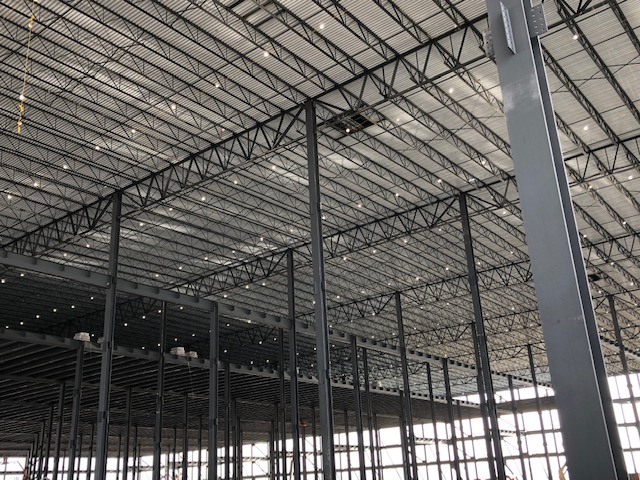
Traditionally, construction projects have followed the design-bid-build (DBB) process, a linear method in which the owner commissions an architect to design a project, followed by a proposal or bid submission period and ending with negotiations and contract awards.
However, data center construction today often requires a different approach. The DBB process may make it easier for owners to control costs from the outset, but it can often be more costly in the long run, in terms of both resources and time. And in data center builds, losing time is simply not an option. While traditional models have been successful in certain scenarios, today’s construction professionals should also embrace new methods and processes to meet market needs and evolving owner requirements.
The Problem: Why Traditional Delivery Models Fall Short
Modern data center construction requires speed, complexity and scale. As demand rises and schedules continue to tighten, legacy project models can cause delays at crucial moments.
- By nature, the design-bid-build model is sequential.
Although this structure attracts owners seeking cost control and competitive pricing, it creates a siloed process in which key contributors are involved too late to influence outcomes. The overall costs rarely match original bid estimates due to numerous variables, including design-build variations, material cost adjustments, change orders, indirect costs and more.
Plus, DBB does not take a holistic project perspective into account at the outset. Valuable input from contractors, manufacturers and specialty partners is typically absent during the design phase, when the most impactful decisions are made.
- Sequencing slows progress in several ways.
Preparing and issuing comprehensive bid packages, including drawings, technical specifications and revisions, requires time and administrative effort before procurement can even begin. Once bids are received, teams may discover that budget targets, lead times or constructability assumptions do not align with market realities. At that stage, redesigns or scope modifications consume valuable time that data center owners cannot afford to lose.
- There is a disconnect between design and construction.
Materials may be specified without insight into current availability, systems may be designed without installation efficiencies in mind and fabrication constraints may surface only after documents are complete. These late-stage discoveries frequently create gaps between intent and execution, leading to coordination issues and avoidable delays.
- Lowest initial price does not equal best overall value.
In fast-track sectors such as data centers, the true cost of delay can far exceed any savings achieved through a low-bid award. Time to online, schedule certainty and long-term operational performance matter more than isolated first-cost comparisons.
The Heart of the Matter? There is a Growing Need for Speed.
The construction industry undoubtedly needs new and innovative ways to accelerate project timelines.
A recent Goldman Sachs Research report noted that between 1970 and 2024, total workforce productivity in the U.S. more than doubled. However, the construction industry’s labor productivity decreased by 30% during the same period, and overall productivity in the industry has stagnated or declined annually in the U.S. since 1965 (Goldman Sachs & Co., 2026).
When design, procurement, fabrication and construction operate independently, teams are likely to become misaligned. For data center owners seeking speed, scalability and confidence in delivery, a more integrated model is necessary.
To gain another perspective on building data centers, check out this article: The 5 S’s of Data Center Construction.
The Shift to Collaboration-Driven Construction Projects
Traditional, linear contracting models postpone collaboration until after major decisions have been made. Alternatively, integrated approaches bring key stakeholders together from the start, enabling teams to solve problems proactively rather than reactively.
This change is driven by the increasing adoption of integrated project delivery (IPD), design-assist and other collaborative approaches that promote parallel decision-making. The American Institute of Architects (AIA) explains that IPD integrates people, systems, business structures and practices in a process that collaboratively harnesses the talents and insights of all participants. The goals of IPD are to optimize project results, increase value to owners, reduce waste, and maximize efficiency through all phases of design, fabrication, and construction (AIA, 2023).
How it works:
- Instead of waiting for the domino effect of one phase to end before the next begins, a collective team of owners, designers, contractors and material manufacturers can work concurrently throughout the project. They define a holistic project solution based on overall project goals and can coordinate schedules in real time, resulting in a faster, more efficient path from concept to construction.
Selecting experienced partners early can provide immediate advantages in constructability insight, material planning and execution readiness, allowing teams to move forward with certainty.
IPD structures also help align incentives across the project team. When stakeholders are working toward shared objectives, such as accelerated delivery, sustainability targets, budget discipline or long-term operational performance, decision-making becomes more cohesive and outcomes improve.
Instead of optimizing each scope separately, collaborative teams can prioritize what benefits the project as a whole.
Early engagement encourages momentum. Bringing the right team together sooner helps establish a stronger foundation for every phase that follows.
The Benefits of Early Collaboration in Data Center Builds
Better decisions happen when project partners collaborate earlier in the process.
When the companies responsible for supplying, fabricating and constructing the facility are involved early enough to shape the solution, the project will transform from a handoff model into a coordinated strategy. Here are some of the top reasons why:
- Faster Timelines
One of the clearest advantages is schedule acceleration through early coordination. Involving key stakeholders in planning and design enables teams to make decisions early, reducing delays caused by constructability issues that surface later. Structural systems, building components and installation methods can be evaluated in real time, allowing plans to move forward with fewer revisions. - Material Availability Certainty
Rather than relying on assumptions or generic lead-time estimates, project teams gain direct insight from material manufacturers regarding constructability, production capacity and delivery timelines. This visibility helps teams plan accurately and avoid disruptions caused by procurement or logistics surprises. - Strengthened Sustainability Initiatives
For data center owners focused on sustainability targets, electric arc furnace (EAF) steel is a low-embodied carbon option that helps companies meet their goals. IPD also increases efficiency and helps eliminate waste in projects, including “both literal material waste and intangible waste such as wait times, poorly assigned personnel, and overproduction,” according to the Lean Construction Institute (LCI, 2026).
Learn the 3 Reasons to Build Data Centers with Sustainable Steel. - Reduced Redesign Risk
Designs that appear efficient on paper may prove impractical, costly or slow to execute once fabrication and field realities take shape. Involving experienced partners early helps align design intent with actual manufacturing capabilities and installation constraints, minimizing the likelihood of rework, change orders or schedule resets. - Improved Sequencing and Constructability
Teams can evaluate the most effective approaches for the project — whether that means joists or beams, modular systems or conventional methods, pre-engineered solutions or custom assemblies — based on schedule, availability and performance goals. It also helps avoid overdesigning and unnecessary complexity that can slow execution without adding value.
To understand efficiency gains in data center steel constructability from the ground up, read Choosing the Right Building Materials to Speed Data Center Delivery.
Ultimately, collaboration creates alignment across the project lifecycle. In a sector where time to online is critical, that advantage can make all the difference.
How Integrated Project Delivery Enables Scale and Repeatability
Data center construction is rarely limited to a single project. Many owners are developing multi-site portfolios to expand capacity across regions while pursuing repeatable delivery models that can keep pace with ongoing demand. Therefore, success will continue to be measured by efficiency — and now by repeatability across projects.
When IPD teams work together across multiple projects, their solutions, including early engineering coordination and consistent execution strategies, can be carried forward rather than recreated each time. The outcome is a seamless system of agile decision cycles, which minimizes learning curves and supports faster deployment in new markets.
Multi-solution providers like the team at Nucor can strengthen this model by reducing the number of handoffs between vendors and trades. With fewer interfaces for your team to oversee, coordination improves, streamlining procurement and lowering delivery risk.
Dave Eckmann, a structural engineer featured in the Minds of Steel series, mentioned the importance of IPD projects: “…when we put all those bright minds together, we can do amazing things.” Read his story here, and see a full Minds of Steel Q&A on the benefits of IPD with engineer Jeffrey Smilow and architect Jason Smith here.
For owners building at scale, integrated delivery is an ideal platform for faster, more consistent growth.
Supply Chain Certainty is a Competitive Advantage
For data center builds, schedule risk often begins with supply chain shifts. Materials that arrive late or require substitutions can disrupt even the strongest project plan. For that reason, owners are increasingly emphasizing reliable supply networks and execution certainty over lowest initial costs, as they understand that timing accuracy is more valuable in the long term.
Collaboration between design teams and material suppliers offers advantages that transactional sourcing often cannot. Early-aligned teams gain greater visibility into production timelines and availability, enabling decisions informed by real-time market intelligence. That can include access to mill rolling schedules, delivery timelines and verified sustainability documentation, including product-specific environmental product declarations (EPDs).
Manufacturers also add value beyond supply. With direct insight into production capabilities, they can help guide system selection, improve material efficiency and enhance constructability early in the design phase. In this role, Nucor serves as a connector across design, supply and construction — helping teams move faster with greater confidence.
Building Faster Requires Building Together
Since speed, certainty and scalability are now baseline expectations in data center construction, integrated-driven delivery offers an effective path forward. Nucor’s cross-functional team of experts helps you align decision-makers early, reducing friction and improving execution from concept through project delivery.
Alongside data centers, early collaboration with owners, design teams and material suppliers is gaining momentum in other industries where timing, supply chain resilience and speed to market matter most. If you have an upcoming construction project and need a team that works alongside you with end-to-end construction expertise, reach out to Nucor.