
A Glossary of Steel Terminology and Acronyms
Definitions of Steel Industry Terminology, Acronyms and Product Types
Steel is one of the most widely used materials in the world and is essential for many industries, so understanding steel terminology is beneficial for a variety of professions. Whether you are sourcing materials, managing budgets or reviewing design details and sustainability targets, this resource provides a reference for the most common steel terms.
Please note that this list is not exhaustive, but these definitions should help you become more familiar with foundational steel terminology and enhance your understanding of the industry.
Still have questions? Reach out to a Nucor teammate to learn more.
Common Steel Industry Acronyms
- AISI: American Iron and Steel Institute
- ASTM: American Society for Testing and Materials
- BF-BOF: Blast furnace – basic oxygen furnace
- DRI: Direct reduced iron
- EAF: Electric arc furnace
- EPD: Environmental product declaration
- GHG: Greenhouse gas
- HBI: Hot briquetted iron
- HSLA or HSLAS: High-strength, low-alloy steel
- HSS: Hollow structural sections
- LMF: Ladle metallurgy furnace
- LNG: Liquified natural gas
Glossary of Steel Terminology
This glossary defines frequently used terms related to steelmaking and steel products used in applications across a variety of industries, enabling professionals to confidently and accurately understand and navigate the industry.
- Alloy Steel A type of steel combined with more than one alloying element to increase strength, hardness and corrosion resistance. Technically, steel is an alloy itself because it is a mixture of iron and carbon. Still, the industry often uses the term alloy steel to describe steel products with additional alloying elements, as defined by various industry specifications.
- Annealing A broad term used to describe a special heat treatment process to modify a steel’s microstructure to improve its ductility. At Nucor, we use either “batch annealing” or “continuous annealing” depending on the specific steel product being produced.
- Automated Storage Retrieval Systems (ASRS) A computer-controlled system that automatically stores and retrieves goods from defined storage locations, often within a warehouse or distribution center.
- Baghouse An air pollutant control device used to trap particles during steel production by filtering gas streams through large cloth or fiberglass bags.
- Bar A steel product that is used in many industries and applications. Types of bar products include engineered or special bar quality (SBQ), merchant bar quality (MBQ) and rebar. Bar can be manufactured in a variety of shapes, including round, flat, square, wire rod and hex.
- Beam A structural steel product that can be used horizontally or vertically (columns) to provide support for a variety of buildings and bridges. Also referred to as “wide flange,” depending on the audience and industry.
- Biocarbon Also known as biochar, a carbon-rich material produced from the thermal decomposition of biomass such as wood or agricultural waste in a process called pyrolysis. It can be used as an energy source to replace fossil fuels like coke and coal in the BF-BOF steelmaking process.
- Blast Furnace-Basic Oxygen Furnace (BF-BOF) BF-BOF is a traditional steelmaking method in which the blast furnace (BF) produces pig iron from iron ore, coke and limestone, which is then refined into steel in a basic oxygen furnace (BOF). With the rise of global sustainability initiatives, some traditional mills now use electric arc furnaces (EAFs) in place of BFs, so they produce steel through an EAF-BOF process. The most sustainable way to make steel is by using scrap metal as the primary input into an EAF which eliminates the BOF process.
- Capacity The typical amount of steel a mill or facility can produce in a given time period. A mill’s capacity percentage may vary month to month depending on scheduled machine maintenance.
- Carbon Capture & Storage (CCS) A technology that captures CO2 emissions from industrial sources like power plants and stores it underground in geological formations to reduce greenhouse gas emissions.
- Carbon Steel A type of steel where carbon is the main alloying element. This is often interchangeable with “plain carbon steel” where in addition to carbon, manganese is also deliberately added to increase the strength of the steel.
- Caster In EAF and BF-BOF steelmaking, the caster is where molten steel is solidified into specific shapes, such as slabs, billets or blooms.
- Castrip® A process for directly casting molten steel into a hot roll steel sheet with a thickness of around 0.070” without the additional need for a conventional hot rolling mill. This reduces capital investment, energy and environmental cost.
- Charge The act of loading materials into an EAF to be melted into new steel. The charge materials can include scrap and various raw materials.
- Circular Steelmaking A recycling-based steelmaking process that uses an electric arc furnace (EAF) to melt scrap and other inputs into new, high-quality steel. The circular steelmaking process is significantly less emissions-intensive and more sustainable than the integrated steelmaking process.
- Nucor’s circular steelmaking process starts with recycling steel from end-of-life scrap collected from things like decommissioned buildings, old cars and appliances. This scrap is melted using electricity in an EAF to create new high-quality steel.
- The process becomes circular when steel products reach the end of their useful life and Nucor buys the scrap to recycle again into new steel. This cycle can continue infinitely without any loss of steel quality.
- Coating The process of covering steel with another material like tin, chrome or zinc primarily for corrosion resistance.
- Coils A steel sheet that has been wound in a coil. Coils are the most efficient way to store and transport sheet steel.
- Coke A processed form of coal. It is the basic fuel consumed in BF-BOF steelmaking when iron is smelted. About 1,000 pounds of coke are needed to process a ton of pig iron, an amount that represents more than 50% of an integrated steel mill’s total energy use.
- Cold-Finished Bar Cold-finished or cold-drawn special bar quality (SBQ) steel undergoes a lower-temperature process after hot-rolling that refines surface quality, straightness and dimensional accuracy. Cold-finished bars are often needed for tighter tolerances where precision is critical.
- Cold Reduction The process by which a rolling mill reduces the thickness of steel sheet in ambient temperature to make the steel sheet thinner, often with the deliberate intent to impart a desired surface and mechanical property. It is common that pickled hot-rolled steel sheet coils are cold reduced to make cold rolled sheet coils.
- Conduit A steel tube through which something is conveyed. Conduit products are most commonly used for water pipes and protecting electrical wiring in construction.
- Continuous Casting A method of converting molten steel directly into a billet, bloom or slab. These forms can then be further processed into a variety of steel products, including sheet, plate, bar and beam.
- Conventional Metal Building A building constructed using traditional methods of steel fabrication and assembly, rather than using pre-engineered components. Conventional metal buildings offer flexibility in design and are constructed at the jobsite. See “Pre-Engineered Metal Buildings.”
- Core & Shell Refers to the structural components of a data center’s main building (core) and exterior (shell).
- Deep Drawing A common method of forming steel sheet using special dies and presses, where one die pushes the steel into the second die of a defined shape while allowing the steel to flow into the die cavity. It is effective for creating parts with complex shapes, high-precision and durability. Examples include motor shells, fenders, quarter panels and door panels.
- Direct Reduced Iron (DRI) Processed iron ore that is iron-rich enough to be used as a scrap substitute in EAF steelmaking. DRI has a lower carbon content than other iron ore feedstocks.
- Doors (Overhead and High-Performance) Door products that are utilized in industrial, commercial and residential applications to enhance speed, durability and energy efficiency in buildings.
- Electric Arc Furnace (EAF) A type of furnace that primarily utilizes electricity to melt solid steel (scrap and scrap substitutes) into liquid steel. These furnaces can either be DC or AC type furnaces. Globally, the majority of steel is produced by integrated mills using the BF-BOF process, which relies primarily on extracted raw materials and fossil fuels. Nucor’s EAF process produces on average less than one-third of the GHGs compared to the global average for BF-BOF steelmaking.
- Electric Resistance Welded (ERW) Pipe ERW pipe is made from steel sheet coils by cold forming them into a cylindrical shape and welding the edges together, with the weld seam running along the length of the pipe. Standard sizes are up to 24” in diameter, and typical uses include agriculture and irrigation.
- Engineered Bar A steel product that can be hot rolled and/or cold finished. Hot-rolled bar products are specifically designed and manufactured to satisfy specific performance requirements, often for demanding applications. Cold finishing improves the steel's surface quality, precision and strength for precise applications.
- Environmental Product Declaration (EPD) A document that provides transparent information about a product’s environmental impact throughout its lifecycle. An EPD is like a nutrition label, outlining a product’s impact on the environment — it requires one year of production data to be used within a life-cycle assessment (LCA), ultimately creating the product’s environmental impacts in six categories.
- Fabrication The process of taking steel bars, beams, sheet and plate and manufacturing them into new steel products. For example, sheet steel is fabricated into steel conduit, hollow structural sections (HSS) or sprinkler pipes.
- Fasteners Steel products that are used to join two or more objects together in a permanent or non-permanent way. Fasteners serve an essential purpose across industries, including agriculture, automotive, construction, energy, heavy equipment, infrastructure and transportation.
- Ferroalloy A metal product commonly used as a raw material in steelmaking. Examples: ferrochrome, ferromanganese and ferrosilicon.
- Ferrous Scrap Scrap metal that consists primarily of iron that can be remelted and recycled into new steel.
Ferrous scrap includes scrap generated from steel mills like edge trimmings and rejects, industrial scrap from excess steel from stampers (automotive and appliances) and obsolete scrap such as decommissioned vehicles, ships, buildings and bridges.
- Finishing Facilities The section of a steel mill that processes semi-finished steel (slabs or billets) into forms that can be used by end users or sent to other facilities for further fabrication. Finishing operations can include rolling mills, pickle lines, tandem mills, annealing facilities and temper mills.
- Flat Products A classification of steel products that are flat, which includes sheet and plate.
- Galvanized Steel Steel coated with a thin layer of zinc to provide corrosion resistance. Some applications include underbody auto parts, garbage cans, storage tanks or fencing wire.
- Grating Steel bars fabricated into a grid-like pattern, used in flooring and stair treads for industrial, commercial and agricultural applications.
- Heat A single batch of molten steel produced in an EAF or BF-BOF.
- High Strength Low Alloy (HSLA) A specific grade of low carbon steel where certain elements like columbium, titanium or vanadium are added to form microstructural solid precipitates to increase the strength of the steel. These steels offer higher strengths using a lower carbon chemistry that is more conducive for welding, and in some cases, additional resistance to atmospheric corrosion or improved formability.
- Hollow Structural Sections (HSS) A hollow tubular steel product that can be circular, square or rectangular in shape. HSS can be used for a variety of applications but is commonly used as a structural element in construction.
- Hot Briquetted Iron (HBI) DRI that has been processed into compressed blocks called briquettes. Instead of using a blast furnace, the oxygen is removed from the ore using natural gas, resulting in a substance that is 90%–92% iron.
- Hot-Rolled Bar Steel bars that are formed by rolling at high temperatures, usually above their recrystallization temperature. This method facilitates easier forming and shaping, producing a strong and durable product with a rougher, scaly surface ideal for formability.
- Insulated Metal Panels (IMP) Prefabricated building materials made up of two metal skins with a foam core. They are used as a building envelope system for walls and roofs in commercial, industrial and mixed-use construction.
- Integrated or Extractive Steelmaking The traditional method for producing steel starts with mining raw materials out of the ground, including iron ore, limestone and coal (which is used to make coke). Iron ore, limestone and coke are melted in an energy-intensive blast furnace (BF), which reacts with iron oxide and carbon to form two products: iron (saturated with carbon) and CO2 to produce a liquid iron called pig iron. The liquid pig iron from the blast furnace (BF) is then converted into liquid steel using a basic oxygen furnace (BOF), which uses oxygen to remove carbon, producing even more CO2 until the desired steel chemistry is achieved. This method of steel making is commonly used by integrated mills and is commonly referred to as extractive steelmaking. The extractive process is particularly emissions-heavy because CO2 is a byproduct of both steps.
- Iron Ore A mineral containing enough iron oxides where metallic iron can be extracted using a variety of methods. The most common method uses a blast furnace (BF), but Nucor uses a less CO2-intensive direct reduced iron (DRI) method.
- Joists and Joist Girders Versatile and cost-effective fabricated structural support components used in a wide range of building projects that require accommodating heavy loads and large spans, such as industrial buildings, warehouses and commercial structures.
- Ladle Metallurgy Furnace (LMF) A type of furnace used to further refine the chemistry and internal cleanliness of the steel, which is often referred to as “secondary steelmaking.” These furnaces are typically AC-type furnaces.
- Line Pipe A type of steel pipe used to transport oil, natural gas and water over long distances, which can be made from steel sheet or plate.
- Liquified Natural Gas (LNG) Natural gas that has been cooled to a liquid state to be more easily stored and transported for the energy industry.
- Long Products Classification of steel products that includes bar, rod and structural products that are long rather than flat.
- Low-Embodied Carbon Steel Steel produced with reduced greenhouse gas (GHG) emissions. It can also be referred to as green steel or sustainable steel.
Defining characteristics of low-embodied carbon steel:
- Manufactured using sustainable technologies like an electric arc furnace (EAF)
- Composed primarily of recycled scrap metal rather than mined raw materials
- Produced with lower-than-average GHG intensity for the global industry
- Backed by an Environmental Product Declaration (EPD)
- Complies with climate legislation requirements
- Merchant Bar or Merchant Bar Quality (MBQ) A group of hot-rolled steel shapes that consist of rounds, squares, flats, strips, angles and channels, which fabricators, steel service centers and manufacturers cut, bend and shape into products. Merchant products require more specialized processing than reinforcing bar (rebar).
- Metal Deck/Decking Corrugated metal sheeting used as a structural roof deck or a composite floor deck and supported by steel beams or joists.
- Metallurgy The study of the properties of metals and their production and purification. It is common for steel manufacturers to have teams of metallurgists at their steel mills and facilities to ensure precise metallurgy in steel products.
- Micro Mills A smaller, more specialized version of a mini mill that uses EAFs and scrap steel to produce new steel but is designed to serve more regional markets. Rebar is a common specialization of micro mills.
- Mini Mills A common term used to describe a steel mill that primarily uses an EAF to melt scrap into a prime steel product. Historically, this term was largely made popular with the creation of Nucor’s first steel mill in Darlington, SC in 1969. Smaller, more compact and more flexible than integrated mills, mini mills primarily produce steel by melting and refining scrap and scrap substitutes using EAF technology. This contrasts with integrated steel mills that typically use BF-BOF furnaces to produce steel from iron ore.
- Patina Also known as weathering, it is a self-healing, stable, protective oxide layer on steel, resulting in a consistent, textured rust-like appearance that is resistant to atmospheric corrosion.
- Pig Iron Iron that is commonly produced by a blast furnace (BF) that typically contains over 90% iron with approximately 3-4% carbon. Pig iron is converted into liquid steel using a basic oxygen process (BOF). Pig iron is often used as a scrap substitute in EAF steelmaking to refine the steel chemistry and provide fuel during melting.
- Piling Structural steel sections driven into the ground to support permanent or temporary structures to hold back soil or water. Engineers and contractors value the durability, strength and versatility of piling for multiple applications. Types of sheet piling include Z-type, H-pile, flat web and pan type.
- Plate Sheet steel with a width of more than eight inches and with a thickness ranging from one-quarter of an inch to more than one foot.
- Pre-Engineered Metal Building (PEMB) Custom-engineered metal building systems that are designed and fabricated off-site, then assembled at the construction site.
- Quality Assurance Line (QAL) The processes and procedures to ensure a steel product or process meets quality standards and customer expectations. It is a proactive approach that prevents defects rather than detecting them afterward.
- Racking Premium pallet racks and accessories for storage systems in warehouses and industrial settings, used to organize and store pallets and other heavy items. Racking is most commonly used in warehouses, distribution centers and data centers.
- Raw Materials Basic substances or materials added to furnaces to create new steel. The primary raw material used for EAF steelmaking is ferrous scrap from recycled steel and other scrap substitutes such as high-quality DRI, HBI and alloying elements can be added to achieve the desired chemical composition of the steel. The primary raw materials for BF-BOF steelmaking are iron ore, coal and limestone.
- Rebar/Reinforcing Bar A steel bar used to strengthen concrete structures, available in a full range of sizes and grades in straight lengths, coils or spools.
- Reducing Agent A substance that causes another substance to be metallurgically reduced. In steelmaking, either natural gas or coal can be used as a reducing agent to remove oxygen from iron ore to produce a scrap substitute.
- Reversing Mill A special rolling mill that is used to reduce the thickness of steel sheet or plate by passing the steel back and forth through the mill multiple times, with each pass decreasing its thickness until it reaches the desired dimension.
- Rod Round, thin semi-finished steel length that is rolled from a billet and coiled for further processing. Rod is commonly drawn into wire products or used to make bolts and nails.
- Rolling Schedule A table that provides a list of planned manufacturing activities, timelines and product availability for steel mill production. Rolling schedules provide steel purchasers and design professionals with insights into when a specific mill plans to roll certain shapes and grades. This can help determine logistics timelines for product end uses, which will, in turn, affect construction timelines.
- Scrap The recycled steel that makes up the primary feedstock used in EAF steelmaking.
- Scrap Substitute Raw material that can be used in addition to or in place of scrap in EAF and BF-BOF steelmaking. Scrap substitutes include DRI, HBI, iron carbide and pig iron, among others.
- Semi-Finished Steel Steel shapes like blooms, billets or slabs that are later rolled into finished products such as beams, bars or sheet.
- Service Center The intermediaries between steel manufacturers or fabricators that maintain a diverse inventory of steel grades and forms in smaller quantities, ensuring a reliable supply and decreasing lead times for customers. Service centers often use steel processing equipment such as slitters, small rolling mills, and blanking lines to further process steel products produced by mills to meet the specific needs of end users.
- Sheet Strong, durable and versatile flat-rolled steel for automotive, appliance, construction, pipe and tube and many other industrial and consumer applications. Sheet can be hot-rolled or cold-rolled and coated, depending on project needs.
- Slag A necessary co-product of the steelmaking process. During steelmaking, solid products not desirable in the final steel product emerge as the steel is being melted. Slag is less dense and floats on top of the liquid steel, where it is chemically refined to serve three primary functions:
- Refines the chemistry of the steel
- Protects the refractories of the steelmaking equipment
- Regulates the temperature by directing the heat into the steel
Like steel, slag is 100% recyclable and is used in applications like construction gravel, agricultural soil remediation and as an aggregate used to make roads.
- Smelt The process of extracting iron from its ore by heating it with a reducing agent like coke at high temperatures in BF-BOF steelmaking. This process separates the iron from other elements and impurities in the ore, producing liquid iron that is then further refined into steel.
- Special Bar Quality (SBQ) Higher quality carbon and alloy bars that are used in the forging, machining and cold-drawing industries for the production of automotive parts, hand tools, electric motor shafts and valves. As a form of engineered bar, SBQ is cold-rolled and undergoes rigorous testing and quality certification during production, resulting in improved surface finish, straightness, mechanical properties and machinability.
- Sprinkler Pipe Steel pipes in fire sprinkler systems are designed to transport water or other fire-retardant liquids to sprinkler heads, specifically made to endure the pressures and risks associated with fire suppression.
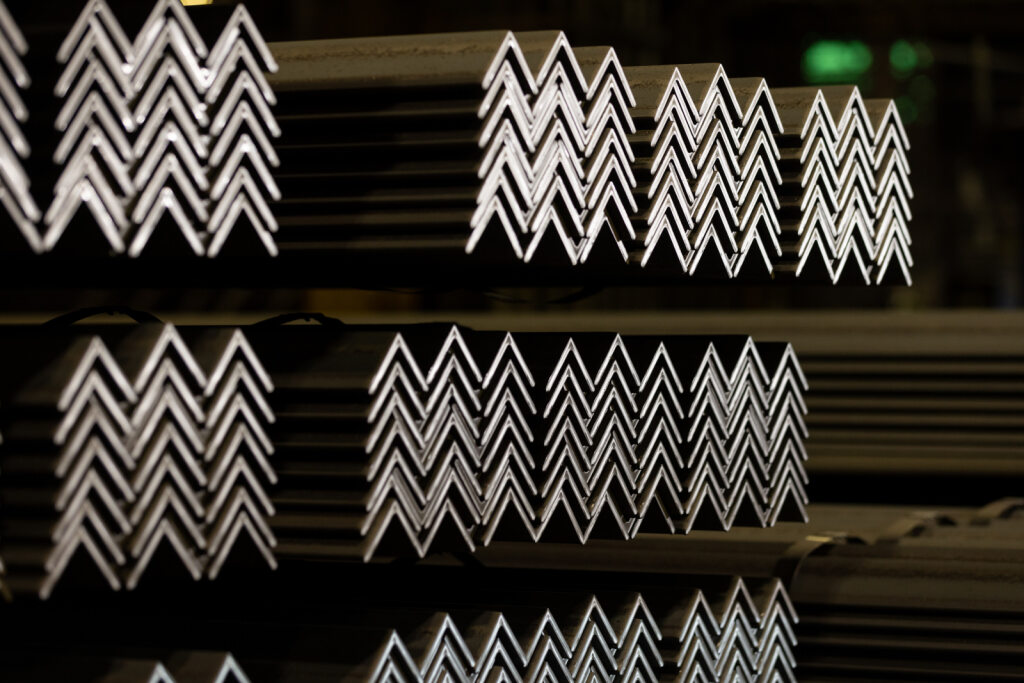
- Structural Steel High-strength steel used in the framework of buildings and other structures. Its high strength-to-weight ratio and durability are essential for load distribution and ensuring stability in construction projects. Types of structural steel products: beams, channels, angles, piling and HSS.
- Substrate The base metal or material onto which a coating is applied or where a process is conducted, or the foundation upon which other layers or treatments are added to enhance the steel's properties or protect it from corrosion.
- Tandem Mill A special rolling mill used to reduce the thickness of steel sheet or plate. The design uses several mill stands (typically 4 to 7) arranged in line to reduce the steel thickness. Due to the high reductions required in thickness, the steel passes through each mill stand once, where the work rolls further compress it to the desired thickness.
- Tonnage Measurement of weight in tons or tonnes. A ton is an imperial unit of measurement primarily used in the United States, and a tonne is a metric unit of measurement used primarily outside of the United States in countries like the United Kingdom.
- 1 tonne is equivalent to 2,000lbs or 907kg
- 1 ton is equivalent to 2,205lbs or 1,000kg
- Transmission Poles A type of utility pole made of cylindrical steel that supports overhead power lines and other utilities for the transmission market.
- Vacuum Degassing A specialized process that exposes the steel to a vacuum environment to modify the chemistry of the steel where carbon is significantly reduced to typically less than 1%; however, additional elements like hydrogen and nitrogen can also be reduced to produce specialized steels including hydrogen induced crack resistant (HIC) steels, extra deep-drawing and interstitial-free (IF) steels, electrical steels, enameling steels and dent-resistant or bake hardening (BH) steels.
- White Space The internal structural components of a data center, including steel containment and pathway support structures, airflow containment, pathway products, server network racks & wall units, cages and cabinets & racks.
Explore Nucor’s Steel Products and Capabilities
Nucor is dedicated to transparency in the steelmaking process and continues to invest in new products, resources and capabilities to meet both current and future market needs as we expand the circular steel economy. Learn more
Learn additional terminology related to sustainability in the steel industry in Sustainable Steel 101: A Glossary of Terms You Need to Know.