


Why Domestic Steel Is Essential to the Future of U.S. Energy Infrastructure
How American-Made Steel Supports Oil & Gas, Nuclear and Renewable Energy Growth
Global energy demand is outpacing supply, highlighting the need for diversified, reliable energy sources and expanded generation and transmission infrastructure.
Energy is a deeply interconnected system, and steel is fundamental to every segment of its infrastructure. As demand for energy continues to grow, supply chain reliability for constructing energy infrastructure will be essential. Nucor is supporting that expansion with a robust, reliable, domestic steel supply chain, providing the materials and expertise to build the future of energy infrastructure.
Constructing Oil and Gas Pipelines
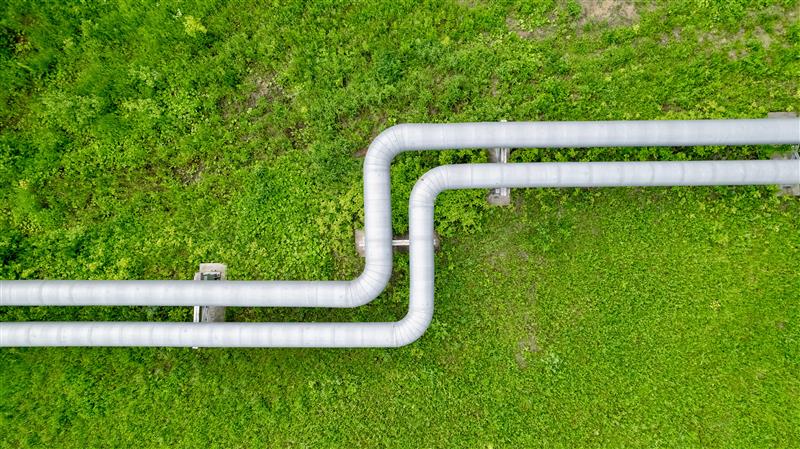
At every stage of the oil and gas value chain, the industry relies on high-strength carbon and alloy steels used in oil country tubular goods (OCTG) and cross-country line pipe, designed to withstand extreme pressures, high temperatures and corrosive environments.
Beginning with the extraction stage, plate, sheet and bar steel products are used for drilling rigs, tools and well casings designed to endure deep-well pressure and mechanical stress. During transport and storage, welded or seamless pipeline-grade steel offers exceptional toughness and corrosion resistance for the safe movement of crude oil and natural gas. For the refining and processing stage, facilities depend on corrosion-resistant plate, pressure vessel quality (PVQ) steel and heat-treated alloys that maintain performance under sustained high-temperature operation.
What steel products are essential for the growth of natural gas energy generation?
- Natural Gas (NG): A critical transition fuel, natural gas infrastructure relies heavily on corrosion-resistant welded and seamless steel pipe, plate and structural shapes for efficient and safe transport.
- Liquefied Natural Gas (LNG): LNG terminals and processing plants require steel that can withstand cryogenic temperatures and high pressure, often using durable plate, cryogenic rebar and specialized alloy steel products for storage tanks, containment systems and piping networks.
- Combined Cycle Gas Turbine (CCGT) power plants: A highly efficient system that uses gas and steam turbines to boost electricity output more efficiently. Starting with a gas turbine that generates electricity, the resulting exhaust gases are used in a heat recovery steam generator (HRSG) to produce steam, which drives a second turbine to generate more power. CCGT plants rely on a range of specialized steels to withstand high temperatures, pressure cycles, thermal fatigue and corrosive environments, including high-strength steels for structural components and specialty alloys within the turbines.
American-made steel can deliver the consistent quality, material traceability and safety assurance that critical infrastructure demands, while meeting project timelines and strict requirements.
Steel is infinitely recyclable, so end-of-life products can be transformed into new construction projects using the electric arc furnace (EAF).Discover how steel scrap from decommissioned oil rigs can enable the future of data centers here.
Building Nuclear Energy
Nuclear energy relies on materials that can withstand the most demanding environments on the planet. Every component, from containment structures to pressure vessels and reactor support systems, must meet exacting standards for strength, heat resistance and long-term performance.
Domestic steel manufacturing provides a decisive advantage for this sector. Producing safety-critical materials within the United States ensures full material traceability, regulatory compliance and alignment with nuclear-grade quality certifications. A domestic steel supply chain also reduces logistical risk through shorter project timelines and strengthens national energy security.
Emerging technologies like small modular reactors (SMRs) and fusion energy are redefining how nuclear power is built and deployed. These intricate systems rely on high-performance steels, including plate, rebar and structural steel products that can be precisely fabricated, transported and assembled while maintaining exceptional integrity under high temperature and pressure.
Developing Clean Energy
Clean energy systems rely on steel to operate at scale with the goal to reduce carbon emissions. Steel enables that progress, providing the strength and durability needed to support large-scale generation in demanding environments.
In solar energy, galvanized and other coated steels provide corrosion resistance for racking, framing and mounting systems across both utility-scale and distributed installations. Similarly, hydroelectric facilities depend on high-strength low-alloy (HSLA) steels to withstand the immense pressures of flowing water used in dams, gates and turbines that convert natural force into consistent power. Emerging carbon capture projects also depend on advanced domestic steel products, from storage tanks and pressure vessels to specialized pipeline systems capable of managing high pressure while resisting corrosion.
Domestic steel mills play a pivotal role in ensuring these clean energy structures are built with reliable, high-quality materials that meet all OSHA and EPA regulations and support local job creation nationwide.
Connecting America’s Energy Grid
Modernizing the U.S. energy grid ensures that we can meet growing demand by supporting new energy generation sources and improving energy infrastructure.
According to the American Iron and Steel Institute (AISI), the average high-voltage transmission structure contains about 40,000-60,000 pounds of steel (“New and Expanding Demand for Steel in Energy,” 2025). Transmission and distribution networks depend on steel for the utility poles and the steel within the wires that carry electricity across vast distances. American-made steel offers consistent quality and predictable performance, which are key factors for long-term durability in demanding outdoor environments.
As utilities upgrade or replace aging infrastructure, domestic supply helps ensure the timely completion of projects and adherence to national standards. From transmission and distribution poles to transformers and storage facilities, domestic steel provides the foundation for a stronger, more resilient power system that connects energy generation to the communities and industries that rely on it.
Nucor’s Towers & Structures business plans to add 130,000 tons of finished steel transmission pole capacity by 2030. Steel poles help build new lines and modernize existing ones to deliver additional power — all manufactured and fabricated using American-made steel.
American Steel is the Backbone of Modern Energy Infrastructure
Steel provides the strength, durability and adaptability required to construct the infrastructure needed to expand generation, store energy and deliver power.
While steel is produced globally, American-made steel offers many advantages:
- Supply chain assurance: proximity to domestic steel mills improves overall project delivery timelines and mitigates geopolitical and logistics risks.
- Project agility: U.S. producers provide responsive technical support and custom metallurgical solutions alongside production scheduling flexibility to align with complex construction demands.
- Product breadth and compliance: American steelmakers offer a broad spectrum of grades and products for energy applications, engineered to meet stringent mechanical, performance and regulatory standards.
- Economic and regulatory assurance: sourcing domestically eliminates potential tariffs while simplifying compliance with federal requirements and supporting American jobs and industry innovation.
- Reduced embodied carbon: About 70% of domestic steel manufacturers use electric arc furnaces (EAFs) to produce new steel and steel products. Nucor’s circular EAF process emits on average 0.77* tons of CO₂ per ton of steel produced, resulting in less than one-third of the greenhouse gas (GHG) intensity compared to the global average of blast furnace-basic oxygen furnace (BF-BOF) steelmaking (*Worldsteel).
By integrating American-made steel early in the project lifecycle, developers can build energy infrastructure that is stronger and more strategically secure for the nation’s future energy needs.
Did you know?
Through Nucor’s advanced material recovery methods, we recycle reclaimed steel and non-ferrous metals such as copper, aluminum and titanium to meet the growing demand for electricity without the need to source overseas.
Dependence on imported materials creates delays and supply uncertainty — challenges that slow the pace of grid modernization. With a reliable domestic supply chain and a breadth of sustainable steel products, Nucor can be a proactive partner for energy developers and utilities to help them build faster, expand smarter and prepare for the growing demand ahead.
Discover more about Nucor’s capabilities as your material supplier and partner for building the energy addition or contact energy@nucor.com to learn more.