
Nucor Steel Seattle: A Century of Steel, a Sustainable Future
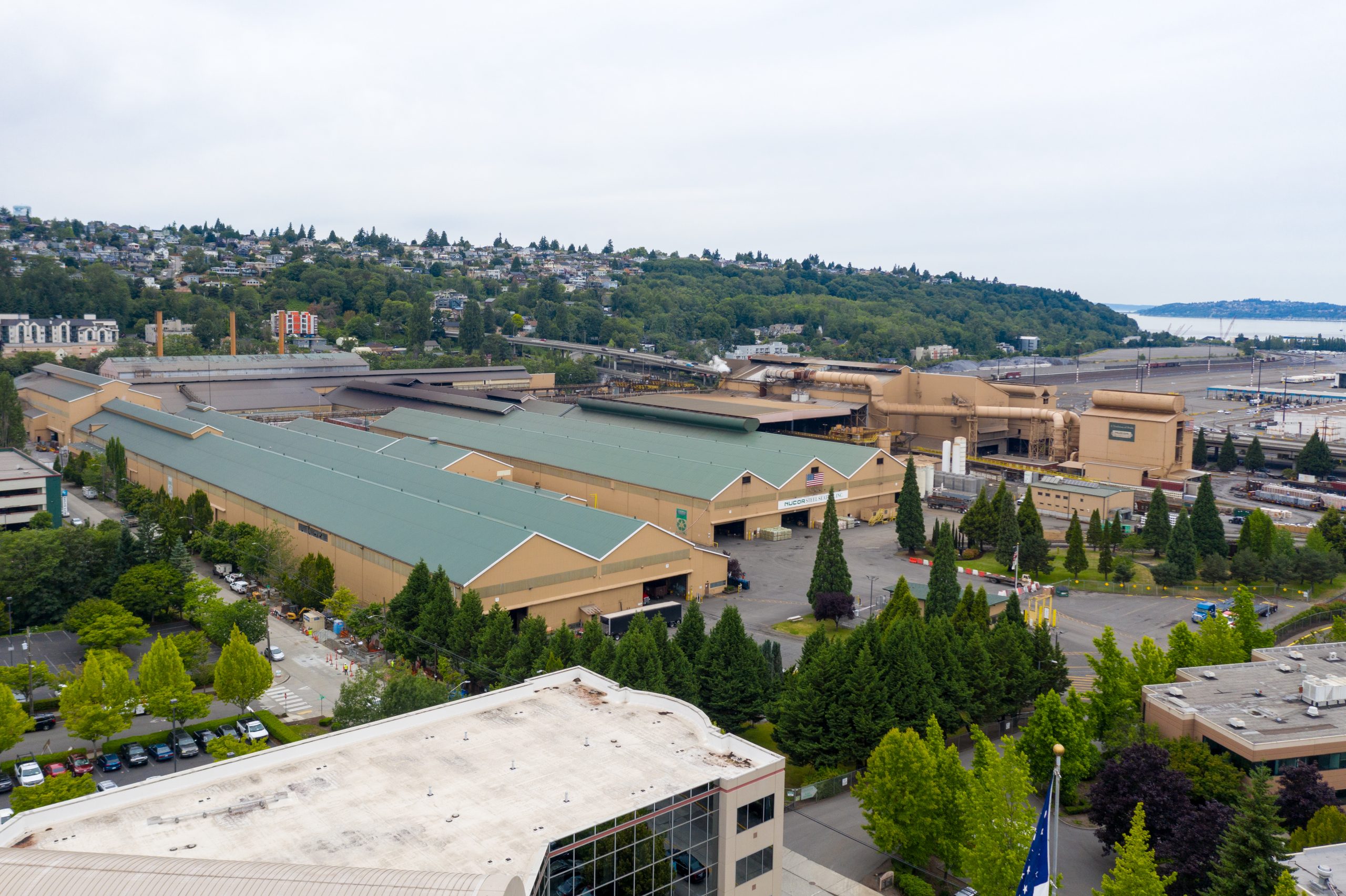
Tucked in among the bustling city of Seattle on the west side along the Puget Sound and the Duwamish Waterway, a mill hums a low, steady tune as it creates circular steel day in and day out.
Nucor Seattle holds a unique place in the city’s history, and its steel has played a crucial role in supporting much of the city’s infrastructure. The mill has supplied steel to many recognizable projects along Seattle’s skyline, including the Seattle Space Needle, SR 99 tunnel, the Seattle Storm practice facility, Lumen Field and other notable buildings.
An Urban Mill with National Reach
Nucor Steel Seattle is the oldest steel mill on the West Coast. When the original Seattle Steel Company began production in 1905, the landscape did not contain the urban buildings and sprawling neighborhoods it does now. Since then, the facility has changed names and owners a few times and was acquired by Nucor in 2002.
In essence, the city of Seattle grew up around the steel mill.
Over the years, steel from this mill has been used in noteworthy construction projects coast-to-coast, helped protect troops during WWI and WWII and even operated at a low capacity during the Great Depression, producing 20,000 tons in 1932 to sustain necessary projects and employ local workers.
Traditional steelmaking relies on raw materials in a coal-fired blast furnace, but electric arc furnace (EAF) steelmaking gained traction in the 20th century and uses scrap metal as feedstock to produce steel in a more sustainable way. Originally built with a carbon-intensive open-hearth furnace, the Seattle mill transitioned to producing only EAF steel by 1958.
Learn more about the history of EAF steelmaking in Nucor’s Circularity in Steel Series.
Typical EAF mills that can cover up to 1,500 acres or BF-BOF mills that can span thousands of acres. By comparison, Nucor Steel Seattle’s footprint is a mere 45 acres.
Products and capabilities:
The mill holds scrap metal and operates an EAF steel mill, making it an all-in-one circular steelmaking facility where recycled metal is melted down and made into new steel rebar and merchant bar products, which contain an average of 99% recycled metal.
Nucor Steel Seattle proudly recycles 795,000+ tons of metal scrap annually, making the mill the largest recycler in the state of Washington.
How it works:
All of Nucor Steel Seattle’s steel products start as scrap metal from end-of-life items such as post-consumer, industrial or demolition scrap. The scrap is melted into rectangular bars or billets, then passes through an 18-stand rolling mill with a 3-to-18 bar capacity to produce final rebar and merchant bar products aligned with customer specifications.
Discover more about the process from scrap to new steel.
Rebar is Nucor Steel Seattle’s top product, accounting for about 80% of shipments. Almost every construction project requires rebar, and Seattle makes a wide range of metric and imperial standard sizes. Its other product is merchant bar quality steel, or MBQ, which is produced in flat and angle bar shapes.
Sustainability & Environmental Initiatives
As the largest recycler in North America, Nucor is a leader in sustainability and is committed to responsible practices in the steel industry, including how we manage daily operations across our mills.
Nucor Steel Seattle is no exception: it operates in one of America’s most sustainability-conscious urban areas, requiring continuous innovation and adaptation to align steelmaking practices with community priorities.
Powered by carbon-neutral hydro-powered energy and guided by rigorous environmental standards, the mill demonstrates how steel production and responsible operations can work together.
Due to its location in West Seattle, the mill actively works to be a good neighbor. Efforts such as expanding the scrap yard’s roof coverage to reduce noise, using visual alerts instead of audible sirens and maintaining a dedicated team to respond directly to community calls reflect the mill’s commitment to the local community.
Beyond daily operations, the mill is also investing in long-term environmental restoration efforts along the Duwamish Waterway. On land historically used for industrial activity, Nucor Seattle is restoring a section of riverside property into native habitat designed to support biodiversity, improve water quality and stabilize surrounding soils. The project includes partnerships with local tribal representatives and environmental organizations to study and monitor the site’s ecosystem health through ongoing wildlife and habitat research.
The restoration effort reflects a broader philosophy at the mill: sustainability is not limited to steel production itself but extends to how the land, water and surrounding community are supported for future generations.


Modern Technology & Future Investments
Operating a steel mill in the heart of the Pacific Northwest’s technology corridor may seem unexpected, but innovation is deeply embedded in Nucor Seattle’s processes. While the facility produces industrial steel products, it also continuously invests in technologies that improve safety, efficiency, environmental performance and reliability.
That spirit of innovation is evident throughout the mill:
- Nucor Seattle operates two EAF furnaces, advancing the site’s long history of steel production while supporting modern, lower-emissions manufacturing. Due to the site’s compact footprint, the mill operates a rare three-bucket shop configuration designed to maximize efficiency within limited space.
- The mill produces oxygen on-site, which improves operational efficiency and process control while supporting continuous steelmaking operations.
- Smart safety technologies:
- Overhead bridge cranes utilize positioning assistance and collision-avoidance systems to support safer material handling.
- Designated crane no-fly zones help improve coordination and operational safety throughout the facility.
- Drones are used for building and dust inspections, helping teams monitor conditions more efficiently, support housekeeping efforts and minimize disruption to operations.
The mill is also investing in the next generation of sustainable industrial infrastructure. One major initiative is the transition from diesel-powered rail equipment to an all-electric freight switcher locomotive. Supported by a grant from the Washington State Department of Ecology, the project will replace a high-use diesel locomotive that moves scrap, consumables and finished steel products throughout the facility. This is the third Nucor steel mill that has adopted this technology.
The electric locomotive will reduce emissions, lower operational noise and improve air quality for nearby communities, while also supporting the reliability required for 24/7 manufacturing operations. The project reflects a broader commitment to balancing industrial productivity with environmental responsibility and community impact.
Additional investments continue across the site, including expanded scrap yard enclosures designed to improve moisture control and reduce noise, as well as ongoing advancements in automation and robotics to support safer, more efficient operations.
Build Your Career at Nucor Seattle
Nucor Steel Seattle is one of the smallest and oldest mills in the Nucor family of mills and facilities, but its culture is defined by the same core values that drive the Nucor teammates across North America: safety, innovation, teamwork and long-term investment in people. At the Seattle mill, those values are deeply personal. Many teammates have spent decades building careers there, creating a close-knit environment where experience is passed from one generation to the next.
That culture extends well beyond the mill itself. Their team has built long-standing relationships across the West Seattle community, supporting local food banks, youth programs, housing initiatives, cultural organizations and neighborhood events. For example, the team donated over $350,000 to local community organizations in 2025 and volunteered time and resources alongside those funds. The mill regularly welcomes tours and maintains an active environmental team that responds directly to community questions and concerns.
Inside the mill, teammates are encouraged to take ownership and drive improvement at every level of operation. Employee-led innovation is part of the mill’s culture, whether through internally engineered walkway redesigns, operational improvements, safety initiatives or process enhancements.
Today, more than 330 teammates keep the mill operating around the clock. Along with strong earning potential and comprehensive benefits, teammates have opportunities for advancement, professional development and long-term career growth within North America’s largest steel manufacturer and recycler.
Are you interested in being empowered to bring ideas forward, explore new career pathways and contribute beyond your immediate role? You could be part of something both historic and forward-looking at Nucor Steel Seattle.