
Collaboration for Brighter
Days and Better Buildings
This Chicago architect’s vision is to build stronger communities.
Thinking about the
space together
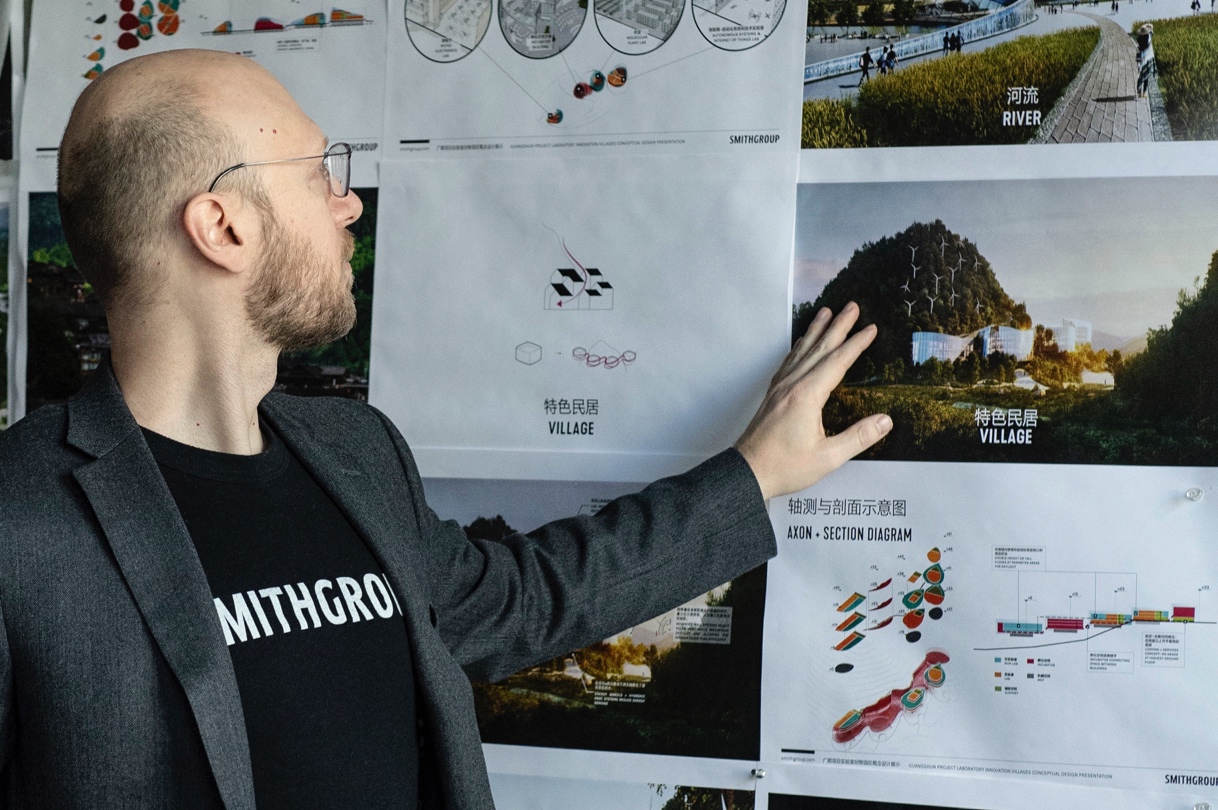
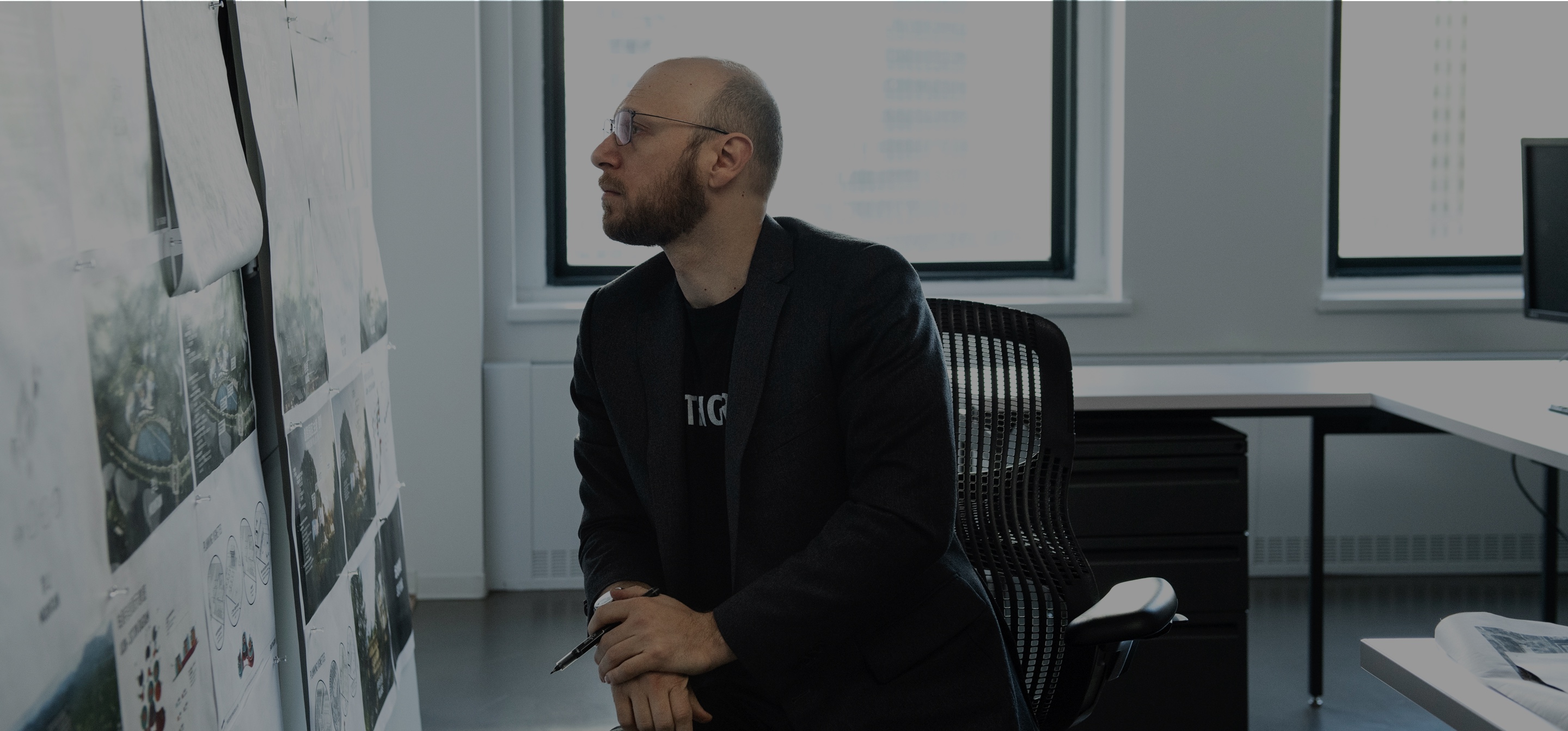
For Jason Smith, one of the most gratifying parts of being an architect is the tangible reward of seeing his visions come to life, and the positive impact they can have on people and communities as they interact with them.
“I’ve had the pleasure of overhearing people talk about a great experience they had because of something I designed,” he says. “They just happened to be talking about it when I walked by.”
Smith, a design principal at SmithGroup in Chicago, knows good projects mean collaboration. He wants his designs to enhance the communities that surround them. To do this, he’s focusing on getting client groups, architects, engineers and, yes, the community involved in his projects.
“We’re cultivating a vision for a project together and I shepherd that process, rather than come up with it all on my own,” he says.
“Some of the coolest spaces I’ve designed have been ones where I’m working with a structural engineer and a facade manufacturer,” Smith states. “We’re thinking about the space together.” Smith says this collaboration results in a better end product, and a better world.
He’s talked to the people who live and work around his buildings so that his designs can be more responsive to the community’s needs. He says it’s crucial to have empathy.
The world is a better place when architects are thinking like engineers and engineers are thinking like architects. We all get more impassioned about the project. That results in so much richer of a product.
He’s learned that getting input early in the process is critical, and it has also helped the bottom line. “When you think of design as a series of hierarchical relationships, you start to understand where you can make trade-offs,” he says.
Overcoming challenges
collaboratively
Smith says people say that there’s more than one way to build something. And those options can have different cost implications.
“But it might not have to drive costs up at all,” he says. “So let’s work with the specialists who understand both the costs and construction. Let’s find a way to work together in a way that’s not going to drive up the cost.”
Let’s find a way to work together in a way that’s not going to drive up the cost.
Smith’s collaborative style extends to working with steel as well.
“One thing that’s really cool about steel is you can shape it so well. Different fabricators are going to have different ways of building complex shapes,” says Smith. He adds that it’s important to have a fabricator involved as soon as possible “to optimize the design for the person who’s going to be manufacturing, fabricating, assembling and building it. And when you optimize it with that in mind, you’re going to end up with higher quality and less cost.”
Adding warmth to the design,
and the community
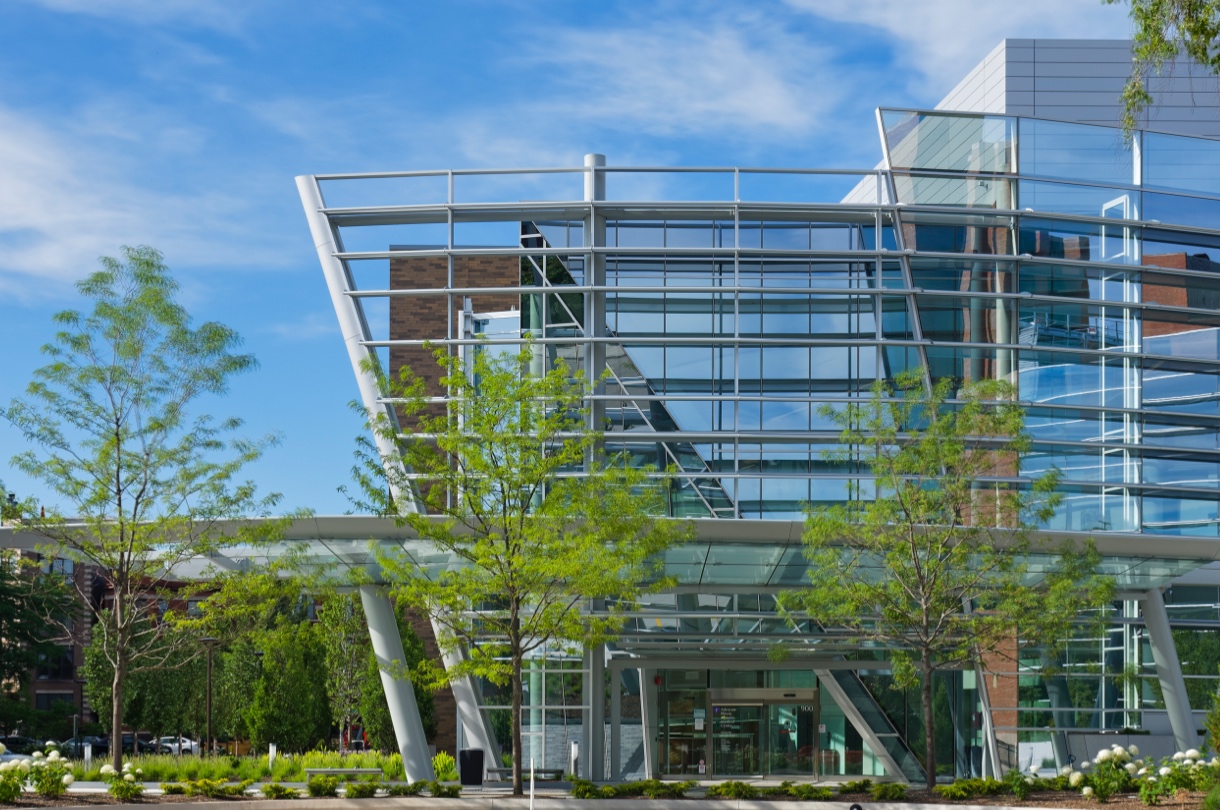
In Smith’s work on the Center for Advanced Care at Advocate Illinois Masonic Medical Center, his client wanted a hospital lobby that didn’t feel like a hospital lobby. Steel played a big part in his vision, as did collaboration.
“We used steel to express the gravity loads from the roof differently from the wind loads acting on the wall,” he says. “We had these tiny pieces of steel at the midpoints of the wall supported by rods. It was just so delicate. It became a part of that wall, part of the way the sun filters through the space. It embodied interdisciplinary design because it took an architect, a structural engineer, and a curtain wall manufacturer to figure out how to make that happen.”
It embodied interdisciplinary design because it took an architect, a structural engineer, and a curtain wall manufacturer to figure out how to make that happen.
The result? The hospital and the community loved it.
“They loved the scale of the lobby and how the light filled the space,” he says, noting that a way to make steel seem warmer is to bring sunlight into the design. “Positioning the lobby based on anticipated angles of the sun warms up something that feels cold.”
Smith will bring empathy and collaboration into his future projects. He says the earlier collaboration starts, the better.
“I believe in the power of interdisciplinary design. That includes collaboration with engineers, architects, contractors, tradespeople and manufacturers. My preference is to have someone like Nucor involved in the early design concept. Working together, we can identify better manufacturing, fabricating and pricing options when we collaborate and understand an owner’s goals and parameters early in the design process.”