

The Spiral: Shaping the Future of Commercial Workspace
How Aeos® High-Strength Structural Steel Brought 66 Hudson Boulevard to Life
Standing out in building design is hard. But standing out in New York City requires a rare combination of expertise, ingenuity and innovation made possible by decades of experience and an unrelenting desire to shape the future.
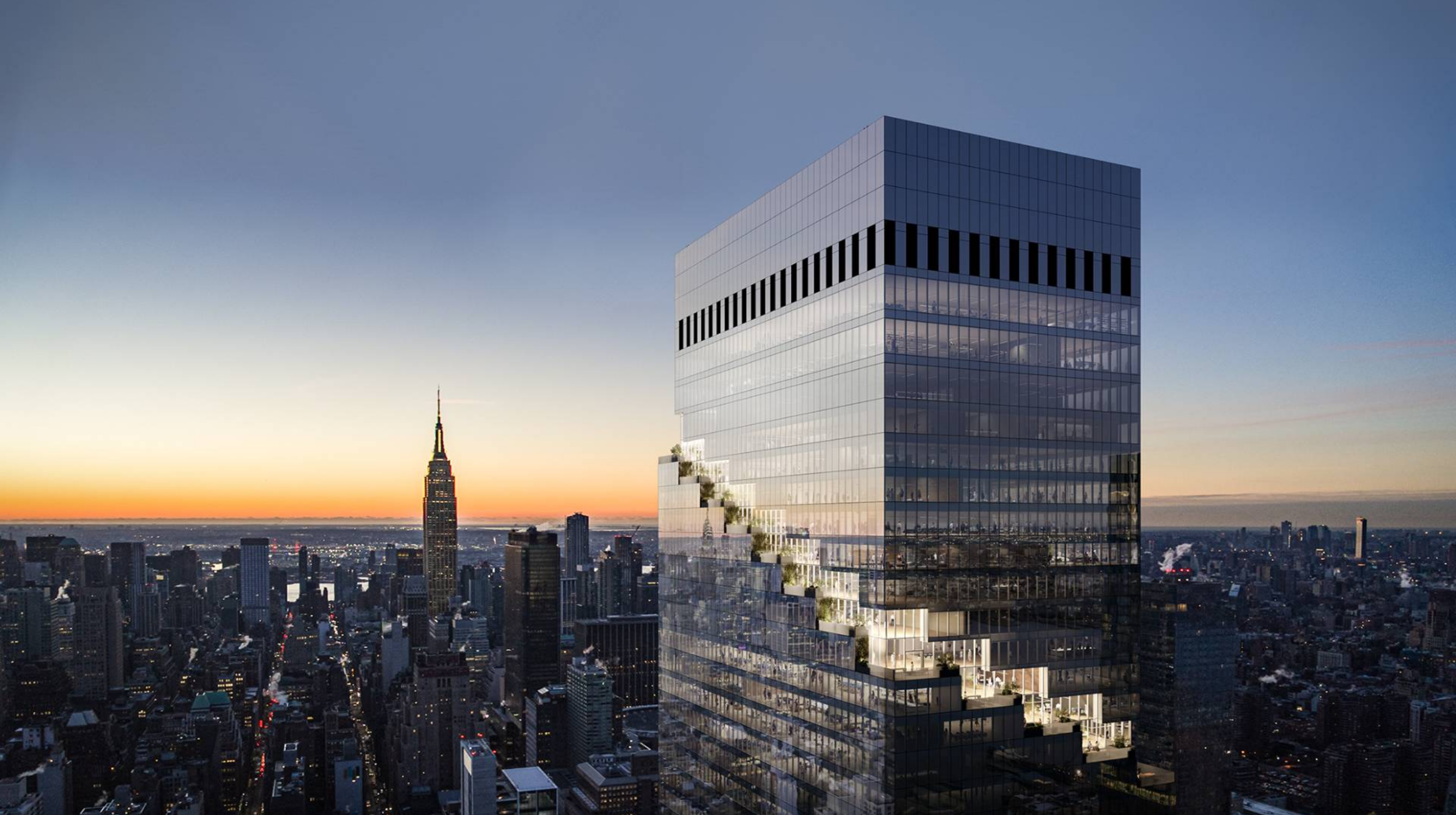
Just ask the construction and design professionals behind the 1,041-foot-tall skyscraper at 66 Hudson Boulevard, commonly known as “The Spiral.” Developed by Tishman Speyer and designed by architects Bjarke Ingels Group and structural engineers WSP USA, The Spiral features 2.85 million square feet – 66 stories – of rentable commercial office space and occupies the block between Tenth and Eleventh Avenues and 34th and 35th Streets in the Hudson Yards area of Manhattan.
Turner Construction Company oversaw the completion of this complex structure, while Banker Steel together with NYC Constructors fabricated and erected the building’s structural steel, much of which was Nucor’s Aeos® ASTM A913 steel.
Project Highlights
- Location
66 Hudson Boulevard, NYC - Structure
66 Stories
2.85 Million Square Feet
Innovative Spiral Design - Design & Construction
Bjarke Ingels
WSP USA
Tishman Speyer
Turner Construction Company
Banker Steel
NYC Constructors
Nucor Products
- Aeos™ Structural Steel
4,900 tons - Total Structural Steel
31,000 tons - Plate
2,700 tons - Deck
2,000,000 square feet
One of a Kind. Sixty Six Times.
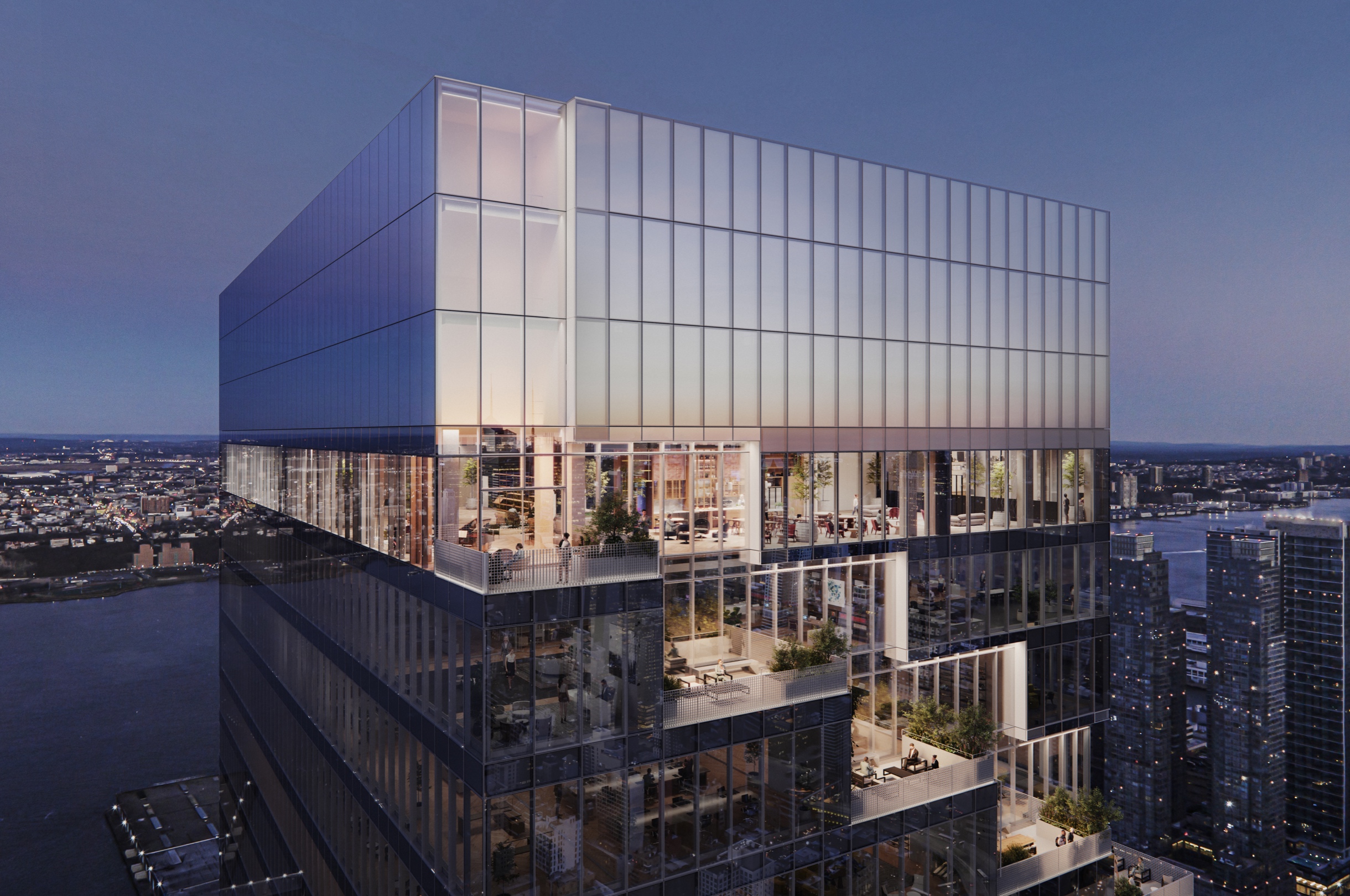
Viewable for miles across the Hudson River, each of The Spiral’s 66 floors is uniquely designed to support the structure’s signature spiral exterior, which features a reflective glass façade.
“The name really says it all,” said Patrick Chan, Former Senior Vice President of Building Structures at WSP USA. “Most commercial buildings tend to be the same footprint all the way up the building. 66 Hudson, with the spiral being one of the feature elements of the architecture, has a different floor footprint on every single floor, and that created a lot of structural challenges. [We] dealt with it by coming up with innovative structural systems.”
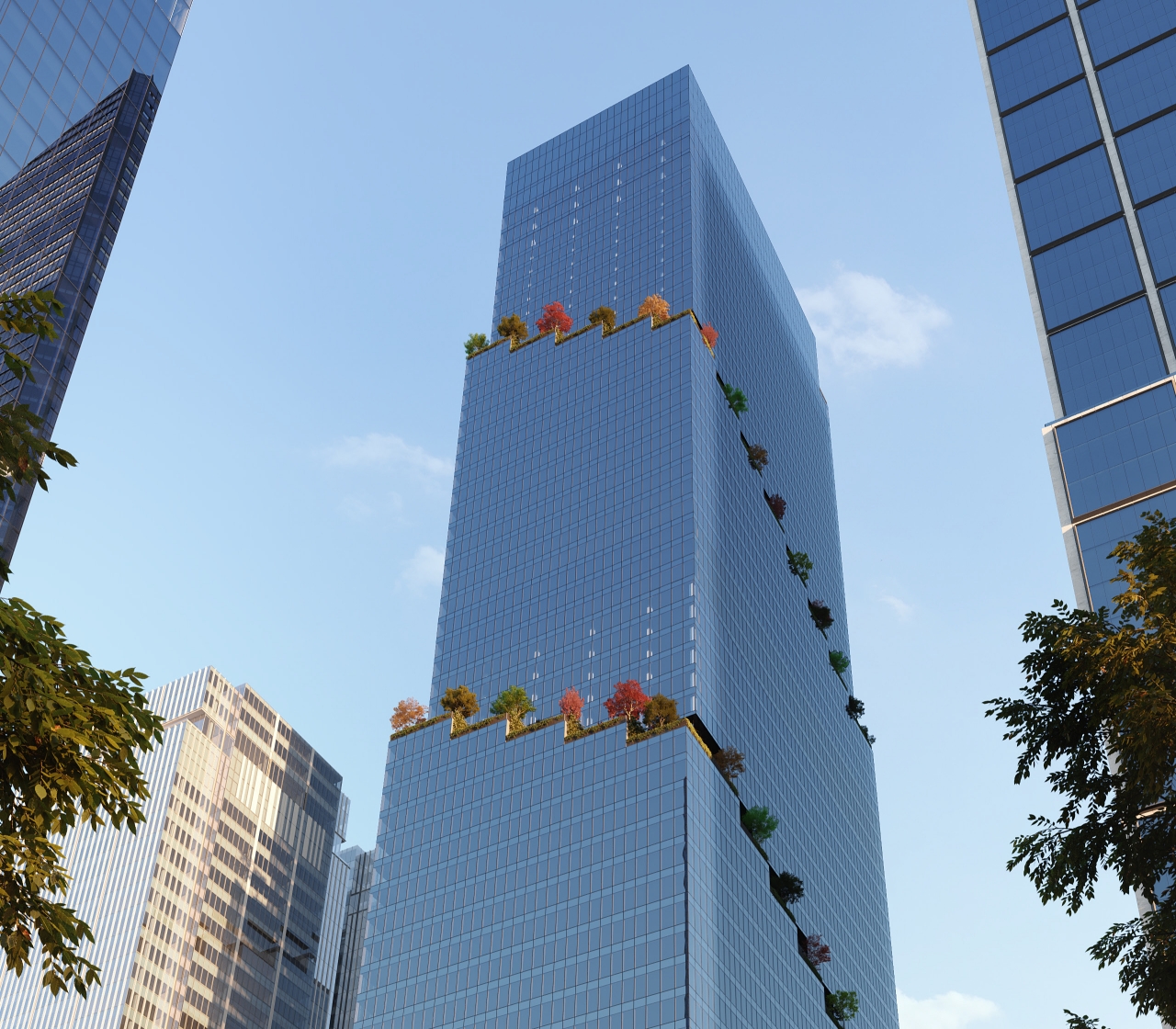
The structure’s signature cascading spiral is a connected system of outdoor terraces, each supporting ample greenery and extending usable floor space. The Spiral’s terraces and their supporting plate sizes shrink with each increment in elevation.
“The spiraling terraces work [their] way up the building and spiral inward as we rise through the spiral system, and the footprint gets smaller and smaller by small amounts,” explained Jeffrey Smilow, Executive Vice President and Managing Director Building Structures at WSP USA. “That’s what makes this very unique. The net result is that every single floor is framed differently.”
That’s what makes this very unique. The net result is that every single floor is framed differently.
Jeffrey Smilow, PE, F.ASCE, EXECUTIVE VICE PRESIDENT AND MANAGING DIRECTOR, BUILDING STRUCTURES AT WSP USA
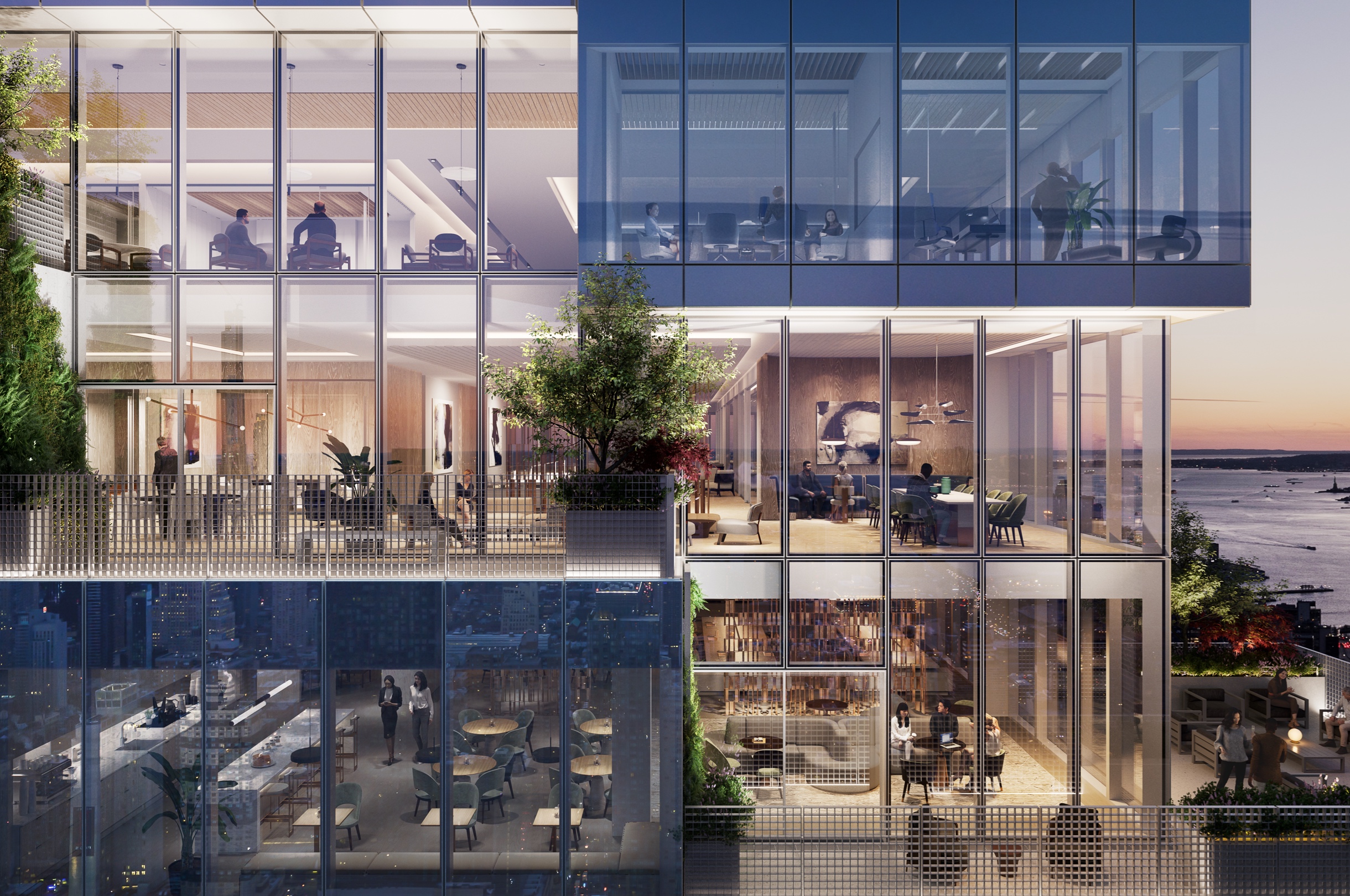
The completed design provides tenants with terrace access and 360-degree views of Manhattan from wherever they are in the building’s outer regions. While a traditional office experience is often limited by the constraints of standard commercial architecture, The Spiral provides a dramatic upgrade by offering the work-life harmony office workers yearn for post-pandemic.
Forward-Thinking Design
To accommodate the unusual challenges posed by The Spiral’s design, engineers had to think creatively. First, they designed a sloped column system that would support The Spiral’s unique architecture of terraces wrapping around the entire perimeter of the building.
“Every single floor has an average of about four columns that basically slope in and outwards to allow the creation of the column-free terraces,” said Chan, who noted that these structural allowances also created horizontal forces that required extra support from the building’s brace core. “The structural system that we use is a series of horizontal floor trusses that you don’t typically see in most buildings.”
However, achieving the required lateral support took less material than anticipated. Using Aeos® ASTM A913 high-strength structural steel in The Spiral’s construction necessitated fewer columns per floor to meet the strength requirements. As a bonus, fewer columns translated to more usable space.
“Using Grade 65 Aeos, we were able to not only reduce the tonnage of this building, [we were able to] reduce the column size as well, which allows for more usable space for the clients,” Chan explained.
Using Grade 65 Aeos, we were able to not only reduce the tonnage of this building, [we were able to] reduce the column size as well, which allows for more usable space for the clients…
Patrick Chan, Former Senior Vice President of Building Structures at WSP USA
Additionally, using Aeos in the building’s core further reduced the total material volume while maximizing the core’s strength. Smilow noted that the lateral system posed the greatest structural challenge during construction.
“Embedded within the core is a steel structure that runs ahead of the concrete shear wall system by approximately 12 to 14 floors,” said Smilow. “So it’s almost two buildings in one until it’s completed.”
Each column was linked through an outrigger system, enabling the entire steel framing system to withstand wind forces. Achieving this level of structural stability while maintaining an essentially column-free space was no easy task. However, Aeos’s high strength-to-weight ratio and flexibility lent itself to this task perfectly.
“With outriggers like [what] this building has, this type of material comes in very handy in avoiding welding issues,” said Smilow. “Of course, it’s high strength. It’s 30 percent stronger than the grade 50 steel.”
Aeos®: Reduced Weld Preheat & Domestic Availability
Of the 31,000 tons of structural steel used in the project, approximately 4,900 tons were Nucor’s Aeos ASTM A913 high-strength structural steel. Aeos also played a key role in reducing overall time and construction costs on the project, particularly during the welding process.
“When we’re working with heavy welds, it’s always a complicated process,” said Smilow. “Anything that could be done to reduce the thickness of flanges by any amount. And in this case, we’re talking 30 percent less material. [That’s] is a big help.”
But Aeos’s utility in the project extended even further, down to the fabrication and erection phases. Due to its low preheat requirements and enhanced weldability, Aeos saved stakeholders time when it mattered most: during the pandemic.
“Back in March 2020, when we all went into the COVID pandemic, New York state law determined that we had to shut down the project,” said Barry King, President of NYC Constructors. “That turned out to be two months of idle, no construction going on. When we came back, our workforce was able to get aligned with the safety protocols of COVID and bring the job within schedule, on time, and within two months of the original schedule.”
Despite a two-month delay, construction teams were able to fast-track the rest of the project due in part to a material that could flex with their schedule. The most significant time savings with Aeos occurred during fabrication, but the material saved valuable hours and manpower on the field as well.
“We did recognize some of that in the field as well, through the winter months, so A913 did save time,” said King. “I believe that Aeos helped the developer through . . . overall cost and budget savings, [which] allowed them to proceed and continue with the project. It will be a factor going forward for future buildings.”
The reduced welding preheat requirement also contributed to being able to stay on schedule. John Grafrath, General Superintendent for Turner Construction, observed this benefit at 66 Hudson: “The welding time dropped dramatically on this project when we were doing our field welds, because [using Aeos] reduced the preheat time that you had to do to complete the weld. And the welding application was also reduced as far as the duration.”
Additionally, as the only domestic A913 steel, Aeos was readily available in a time of major global supply chain issues. Grafrath explained, “Using American-made steel benefited this project because we had zero scheduled delays. We ordered the steel, we fabbed the steel; the steel always came on time.”
Aeos® and The Future of Building Construction
The path to innovation is hardly linear, but it never ceases to deliver world-class results. With Aeos high strength structural steel, the 66 Hudson Boulevard project stayed on schedule while avoiding major construction issues.
“Having used Aeos at 66 Hudson and the benefits that we’ve learned from using it, we would definitely recommend using Aeos for new projects [and] future projects,” said Chan. “High-grade steel is going to be the future of the industry.”
Looking toward the future means choosing sustainable solutions today. Nucor’s Aeos, with a recycled content exceeding 95 percent, provides a sustainable structural steel material that project stakeholders can trust. Smilow noted, “The benefit from having higher-strength, lighter material, [is] less effort in the fabrication process and less impact on the environment.”
Construction professionals observed all aspects of the 66 Hudson build and supported their decision to use Aeos. “I would use [Aeos] on my next project,” said Grafrath. “It raised the safety level, which is the number one thing for us, and it decreased the cost and decreased the schedule for us.”
As tenants enjoy The Spiral’s 66 floors of forward-thinking office space, the structural accomplishments enabled by Aeos demonstrate a future of endless possibilities for steel construction.