
Innovating Requires
Teamwork
How engineer Dave Eckmann transforms creative visions into innovative solutions.

When it comes to steel, Dave Eckmann wrote the guide. Literally. Eckmann, Managing Principal for Magnusson Klemencic Associates (MKA) in Chicago, co-authored “Designing With Structural Steel: A Guide for Architects,” the American Institute of Steel Construction’s (AISC’s) handbook for architects using structural steel in their designs. That kind of cross-disciplinary project—an engineer helping architects better understand how to use materials—is one example of how innovation comes with every one of Eckmann’s projects.
Founded in 1920, MKA is a structural and civil engineering firm that specializes in unique and complex projects worldwide. “We are leaders in our industry and have an incredible opportunity to work with amazingly talented people on some really exciting projects,” Eckmann says.
With 34 years in the industry, Eckmann’s notable work includes Chicago O’Hare International Airport Terminal 5, River Point Tower, Wolf Point East, and The Northwestern Mutual Life corporate headquarters.
Even though he is licensed as a structural engineer and professional engineer, Eckmann brings another superpower to his toolkit: He also is a licensed architect, offering years of experience and an architect’s unique eye to each construction project.
Bridging architecture and engineering
Having both a deep engineering know-how and understanding of the architect’s role gives Eckmann a special approach to collaboration. His problem-solving skills are firmly rooted in his personal experience of moving between the two fields.
“My dad was a civil engineer,” he says, “but he focused on water treatment plants, so that’s what I thought engineering was.” When he was a kid, Eckmann was obsessed with Legos, Erector Sets, and building backyard forts. He did not want to be an engineer—he wanted to be an architect.
“So, I leaned more toward architecture, and that’s what I went to college to study.”
But as he completed the coursework, he gravitated toward structures classes and realized structural engineering was what he wanted to do. He graduated from the University of Illinois with Bachelor of Science and Master of Architecture degrees, specializing in structural engineering.
While architects focus on creation, says Eckmann, engineers focus on innovation and problem-solving.
“I am inspired and influenced by architects,” he says. “I find that architects push me and challenge me in ways that I wouldn’t do myself. That’s part of the fun—rising to that challenge and meeting that need by coming up with structural solutions that achieve the creative objective within the owner’s budget.”
When we put all those bright minds together, we can do some amazing things.
Using steel to innovate

Much of Eckmann’s problem-solving has involved the use of steel. “One reason I’m drawn to structural steel as a building material is that it has the highest strength-to-weight ratio of any building material out there,” says Eckmann.
That structural power brings creative flexibility, too. “I’m very interested in light and transparency,” he adds, “and steel is the material that allows me to achieve that. It’s incredibly efficient when spanning long distances, and that’s an objective in many of our projects: Fewer columns and larger spaces … steel allows us to do that.”
As an engineer, Eckmann is enthusiastic about using steel as a building material. “It’s just going to continue to get better,” he says. “It’s always going to be there. As we’re seeing now, higher-strength steels are available, and that’s wonderful in the sense that we are able to use less of the material—which is great from an environmental perspective—to support the same types of loads.”
Important steel innovations are often achieved when fabricators and architects collaborate, bringing their unique knowledge and backgrounds to the table. For instance, Eckmann discovered that welded connections using Aeos™ (A913) steel require less preheat. That kind of insight can help a team find solutions to a variety of projects.
Because of his deep, versatile knowledge of steel, Eckmann sees the partnership between design and construction as incredibly important, and innovating with teamwork as essential.
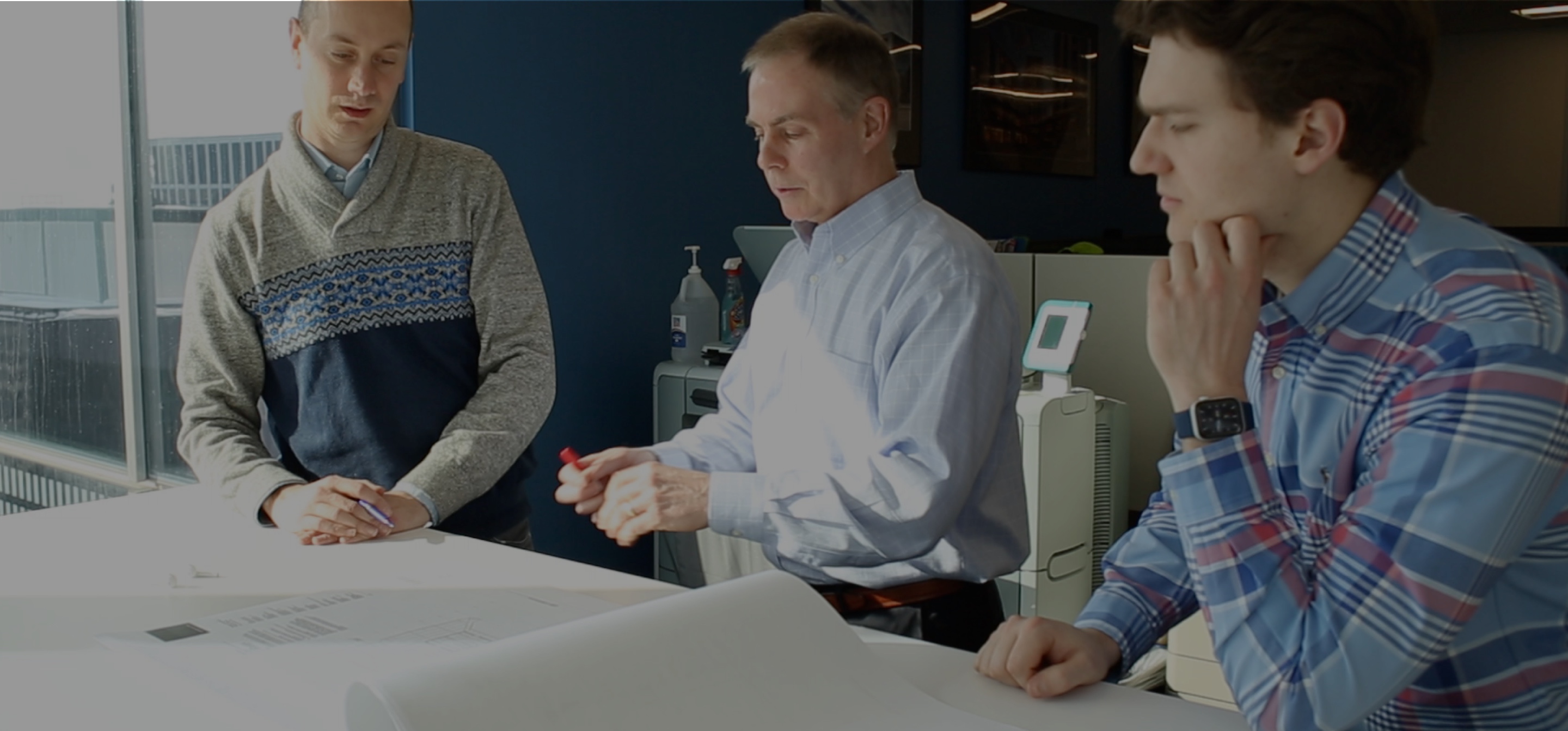
“We like to engage as many bright minds as possible,” he says. “We’re involved in Integrated Project Delivery (IPD) projects where the trade partners or contractors and subcontractors are sitting at the same table with us from the beginning. Obviously, we know how to design and detail, but they know how to procure and construct. So, when we put all those bright minds together, we can do amazing things.”